Remote Work Index: Hybrid Work Is Evolving, But Peak Occupancy Remains Steady

Hybrid work remains a common operating model for many office-based organizations. While some companies that previously allowed flexible or mostly remote work are now increasing required in-office days, the shift toward more structured hybrid schedules has not meaningfully changed peak office occupancy.
For occupiers, this means there is not necessarily an urgent need to expand real estate footprints. Instead, the priority is becoming more strategic: understanding how space is being used, planning for peak attendance, and optimizing offices to better support collaboration, shared work, and employee experience.
The latest Cresa Remote Work Index shows moderate movement across several key indicators. Many of these changes are happening at the margins as hybrid work continues to mature. According to Owl Labs, 73% of hybrid workers are now in the office three or four days per week. Kastle Systems has also reported a modest increase in weekly peak occupancy over the past two years, while public transit ridership rose in the most recent quarter. At the same time, the Flex Index shows that companies are still offering workplace flexibility at levels comparable to a year ago.
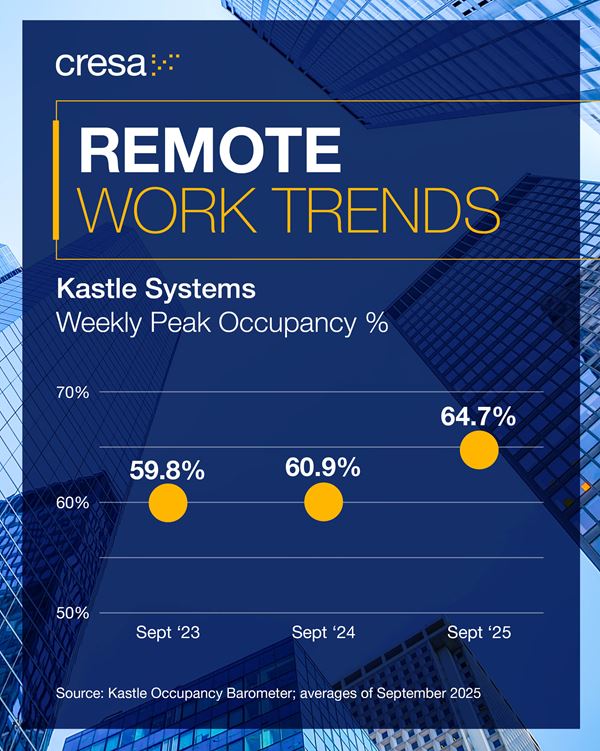
Four years after COVID-19 restrictions began tapering, it is clear that most organizations are not returning to full-time office attendance. Even as high-profile companies such as Dell Technologies and JPMorgan Chase announce stricter return-to-office policies, employee expectations around flexibility remain strong. In fact, 76 percent of employees say they would look for a new job if remote or hybrid work options were eliminated.
The takeaway for occupiers is clear: hybrid work is not going away, but it is becoming more intentional. As organizations refine attendance expectations, real estate strategies should focus less on simply adding space and more on creating offices that work harder, supporting collaboration, culture, productivity, and flexibility.
For a more in-depth look at the U.S. office market, view our latest Office Occupier Outlook report.
Related
.jpg)