Q2 2026 Northern Virginia Office Market Report
For additional insights, download the full report
Market Overview
The Northern Virginia office market continued to show signs of stabilization in the second quarter of 2026. Following 215,731 square feet of negative net absorption in Q1, the market rebounded with 446,292 square feet of positive net absorption in Q2. This reversal suggests that the pace of occupancy losses is beginning to moderate, signaling a potential turning point as the market enters the second half of the year. Reflecting this improvement, the overall vacancy rate declined by 10 basis points quarter-over-quarter to 22.5%.
The overall average asking rent increased 1.5% quarter-over-quarter to $36.15 per square foot, though rates remain down 0.5% year-to-date. Class A asking rents rose 1.4% to $40.04 per square foot, while Class B rents increased 3.6% to $31.23 per square foot. Despite improving market fundamentals, vacancy remains elevated, particularly among Class A properties. Overall vacancy stands at 22.5%, with Class A vacancy at 26.9%, compared with just 16.1% for Class B properties.
Defense contractors continued to drive leasing activity across Northern Virginia, with several sizable commitments reinforcing the region’s position as a leading hub for the defense and government contracting industry. The largest lease of the quarter was Peraton’s 285,000 square-foot commitment across two buildings on Woodland Pointe Avenue in Herndon. Investment activity also strengthened during the quarter, highlighted by several notable acquisitions. Penzance acquired 2000 14th Street North in the Courthouse submarket from Domain Capital, MRP Realty purchased 8614 Westwood Center Drive from Vireo Capital, and Crown Properties Inc. acquired 12930 Worldgate Drive from Santander Bank.
Key Performance Indicators
Vacancy Rate: 22.5%
Net Absorption: 446,292 SF
Direct Asking Rent: $36.15/SF
Market Insights
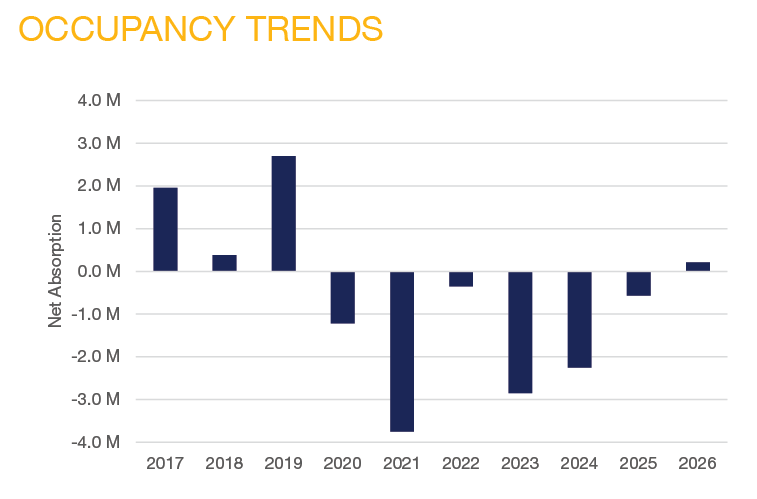
Net absorption totaled 446,292 square feet during the quarter, bringing year-to-date absorption to 211,639 square feet. Class A properties led market gains, recording 461,265 square feet of positive absorption, while Class B assets experienced a modest loss of 5,128 square feet. Despite recent improvements, Class B properties remain the primary source of market losses, totaling 117,453 square feet of negative absorption year-to-date. Since 2020, both Class A and Class B assets have experienced negative absorption in 20 of the past 26 quarters, resulting in cumulative losses of nearly 7 million square feet and 4 million square feet, respectively.
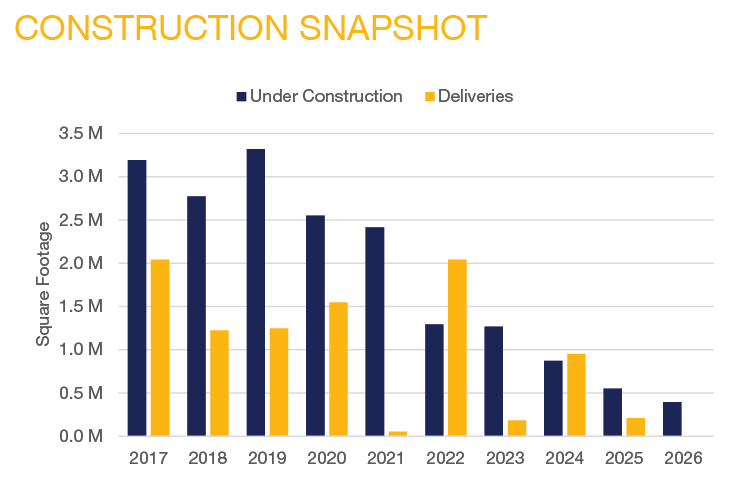
Northern Virginia’s office construction pipeline has slowed significantly, driven by uncertain tenant demand, elevated construction costs, new tariffs, and broader economic headwinds. Currently, 394,606 square feet of office space is under construction, with activity concentrated in the Route 7, Springfield, and Merrifield submarkets. One of the few active developments is 7125 W Falls Station Boulevard, a 270,000-square-foot Class A project in Merrifield that is fully pre-leased as HITT Construction’s new headquarters. No new office deliveries were recorded during Q2 2026, further highlighting the slowdown in new supply entering the market.
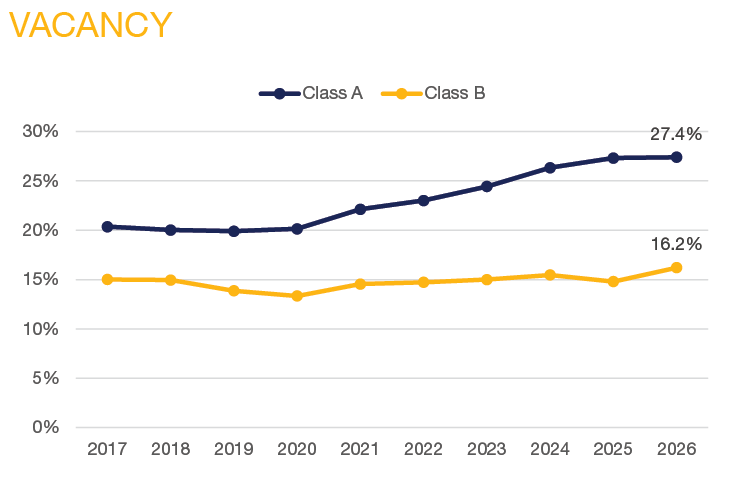
The Northern Virginia office market continues to exhibit a pronounced divide between Class A and Class B properties. As of Q2 2026, Class B buildings maintain a lower average vacancy rate of 16.2%, while Class A vacancy remains substantially higher at 27.3%. Several submarkets are driving the elevated vacancy within the Class A segment, most notably Ballston, National Landing, and I-395 Corridor. Notably, Leesburg Pike in the I-395 submarket has four Class A office buildings that remain largely vacant. These sizable blocks of available space continue to weigh on overall Class A vacancy, as landlords face ongoing challenges attracting tenants amid persistent uncertainty and evolving office space demand.
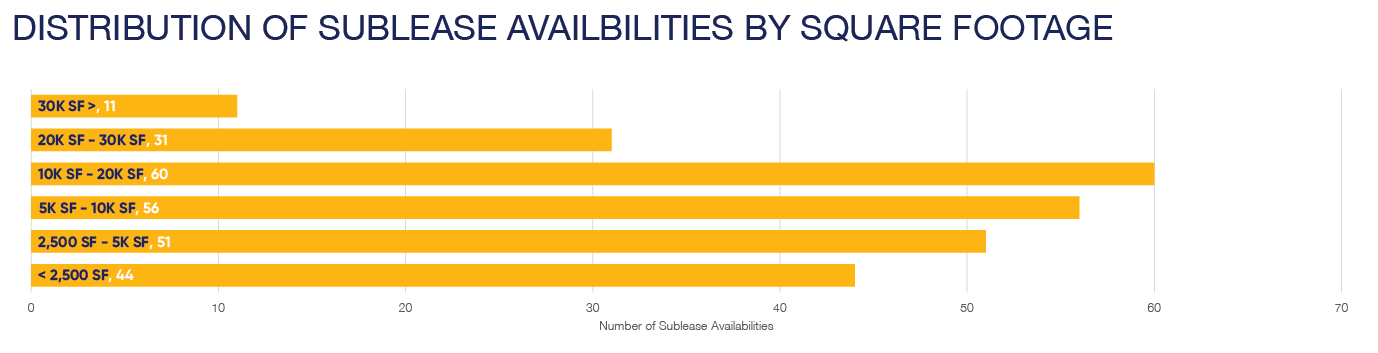
Subleasing continues to play a significant role in VA office market
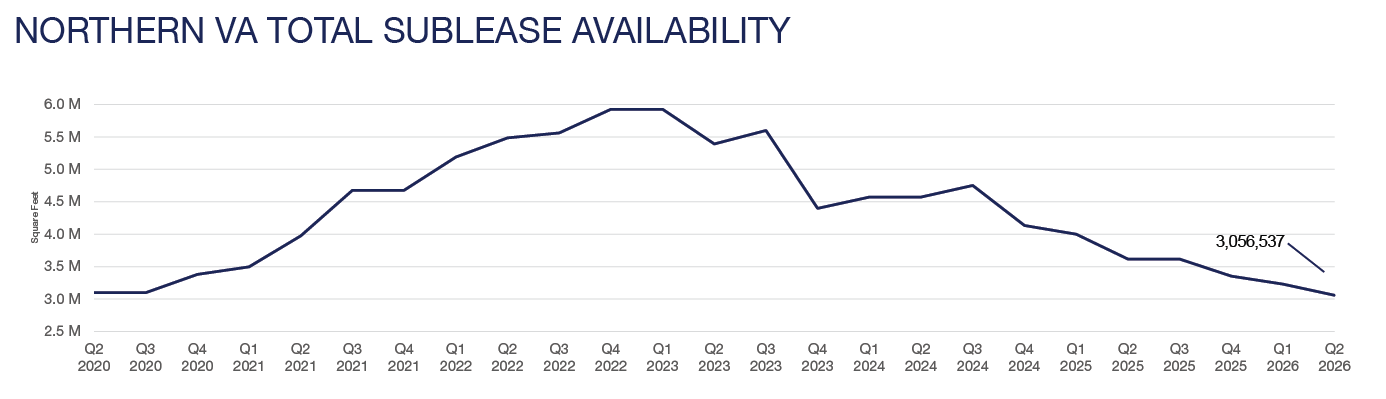
The sublease market continues to play a significant role in Northern Virginia’s office landscape. As of Q2 2026, approximately 253 sublease spaces are available across the region, totaling just over 3 million square feet of office space. Since peaking at nearly 6 million square feet in Q4 2022, available sublease inventory has steadily declined, reaching its lowest level since 2020. The continued reduction in sublease availability suggests that companies are gradually right-sizing their office footprints and that market conditions are moving toward greater stability.
Roughly 66% of available subleases fall between 5,000 and 30,000 square feet, offering a range of flexible options for tenants. Pricing has remained competitive, with 53% of current offerings asking between $25.00 and $35.00 per square foot. Most sublease listings continue to be priced below direct market rates, placing additional pressure on landlords competing for tenants.
Quarterly sublease activity was largely concentrated in the Tysons submarket, where eight new availabilities totaling approximately 52,000 square feet were added during the quarter. In contrast, the Rosslyn submarket saw only two new availabilities. At the same time, more than 50,000 square feet of available sublease space was removed from the market in Rosslyn, contributing to the region’s overall decline in sublease inventory.
Defense Sector Leasing Remains A Market Driver
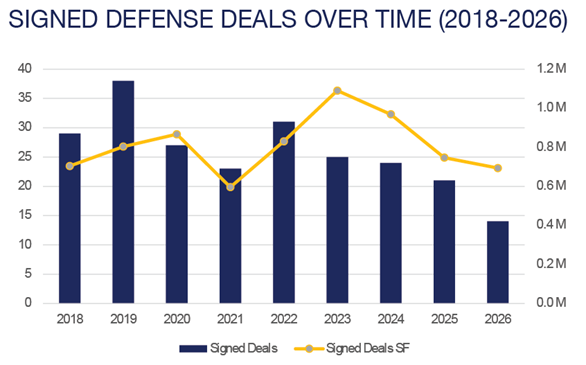
Defense and government contractors represented the largest share of leasing activity in Northern Virginia during the second quarter of 2026, underscoring the sector’s continued role as a primary driver of office demand. While the number of signed defense leases has fluctuated over time, leasing activity has remained resilient. Although the number of transactions peaked in 2019, total leased square footage reached its highest levels in 2022 and 2023, reflecting a shift toward larger transactions. Activity moderated between 2024-2026, but defense companies continue to expand their presence in the region, supported by sustained investment in national security, emerging technologies, and mission-driven capabilities.
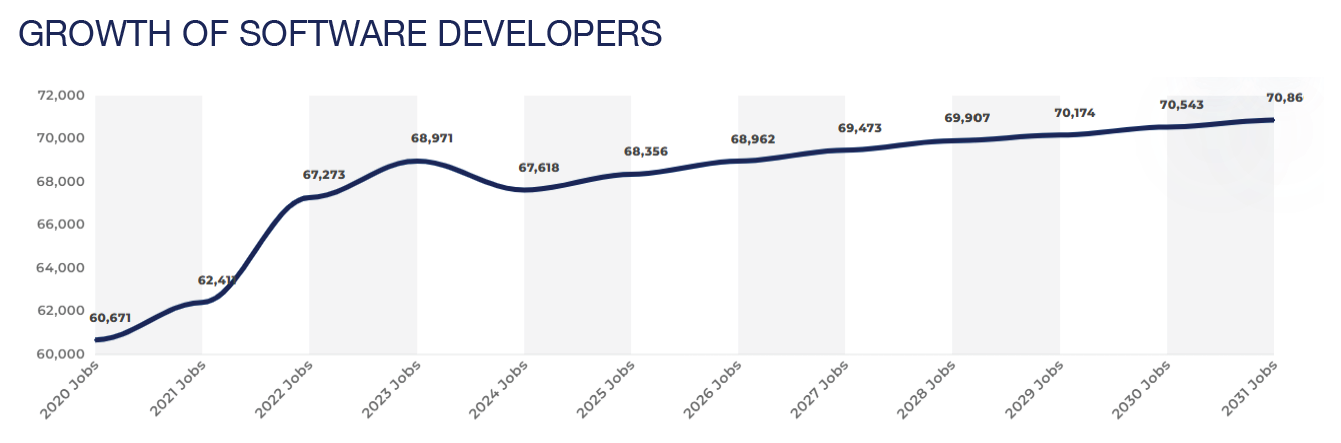
Software developers are among the most in-demand occupations supporting the defense technology industry. The graph above shows continued software developer employment growth across the Washington Metro area since 2020, with further growth projected through 2037. Although the data reflects the broader Washington Metro area rather than Northern Virginia alone, it serves as a strong proxy for the region’s defense talent ecosystem. Northern Virginia remains a hub for defense innovation due to its proximity to federal agencies, concentration of security-cleared professionals, and deep technology workforce.
For additional insights, download the full report