Healthcare Industry Trends Shaping Real Estate Strategy
Healthcare providers are contending with strong demand for medical office buildings while also navigating rising costs, changing care delivery models, and evolving patient expectations. Cresa’s Spring 2026 Healthcare Sector Report delivers healthcare market insights examining the trends influencing portfolio strategy for occupiers across the U.S.
Here’s what we’re seeing:
Medical office building fundamentals remain strong nationally, continuing to outperform the broader office market with occupancy averaging 91.5%. At the same time, healthcare and social assistance added more than 670,000 jobs over the past year, reinforcing long-term demand for healthcare real estate and outpatient-focused facilities.
While overall asking rent growth for medical office buildings has moderated over the past 18 to 24 months, select markets continue to see upward pressure due to limited supply and strong demand for high-quality space. Orlando recorded the highest annual asking rent growth over the past year, while markets including the Bay Area, Miami, and Los Angeles continue to command some of the highest asking rents nationally. These trends highlight the growing divide between newer, premium medical office product and older existing inventory.
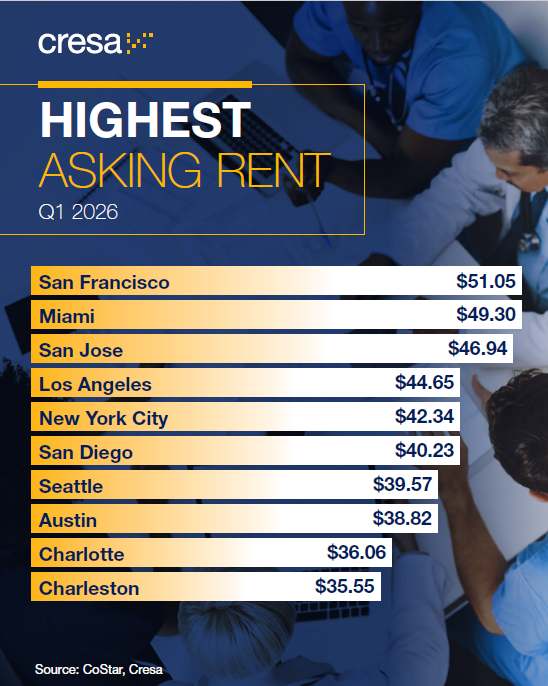
New Class A medical office buildings continue to command a premium as healthcare occupiers prioritize modern, efficient facilities that support patient experience, operational workflows, and long-term flexibility. In many markets, landlords remain willing to invest more heavily in tenant improvements to secure longer lease terms with creditworthy healthcare tenants.
As healthcare services continue shifting toward outpatient and community-based care, providers are reevaluating portfolio strategies, location planning, and patient access priorities. Rising construction costs, constrained development activity, and limited new supply are also placing additional pressure on existing medical office building inventory and occupancy costs.
The report explores how healthcare occupiers are optimizing office space, improving operational efficiency, and creating more flexible real estate strategies to support long-term growth in an evolving healthcare landscape. It also looks at healthcare labor market trends impacting occupiers, including continued hiring demand and workforce pressures shaping location and space decisions.
Download the full Healthcare Sector Report to learn more.